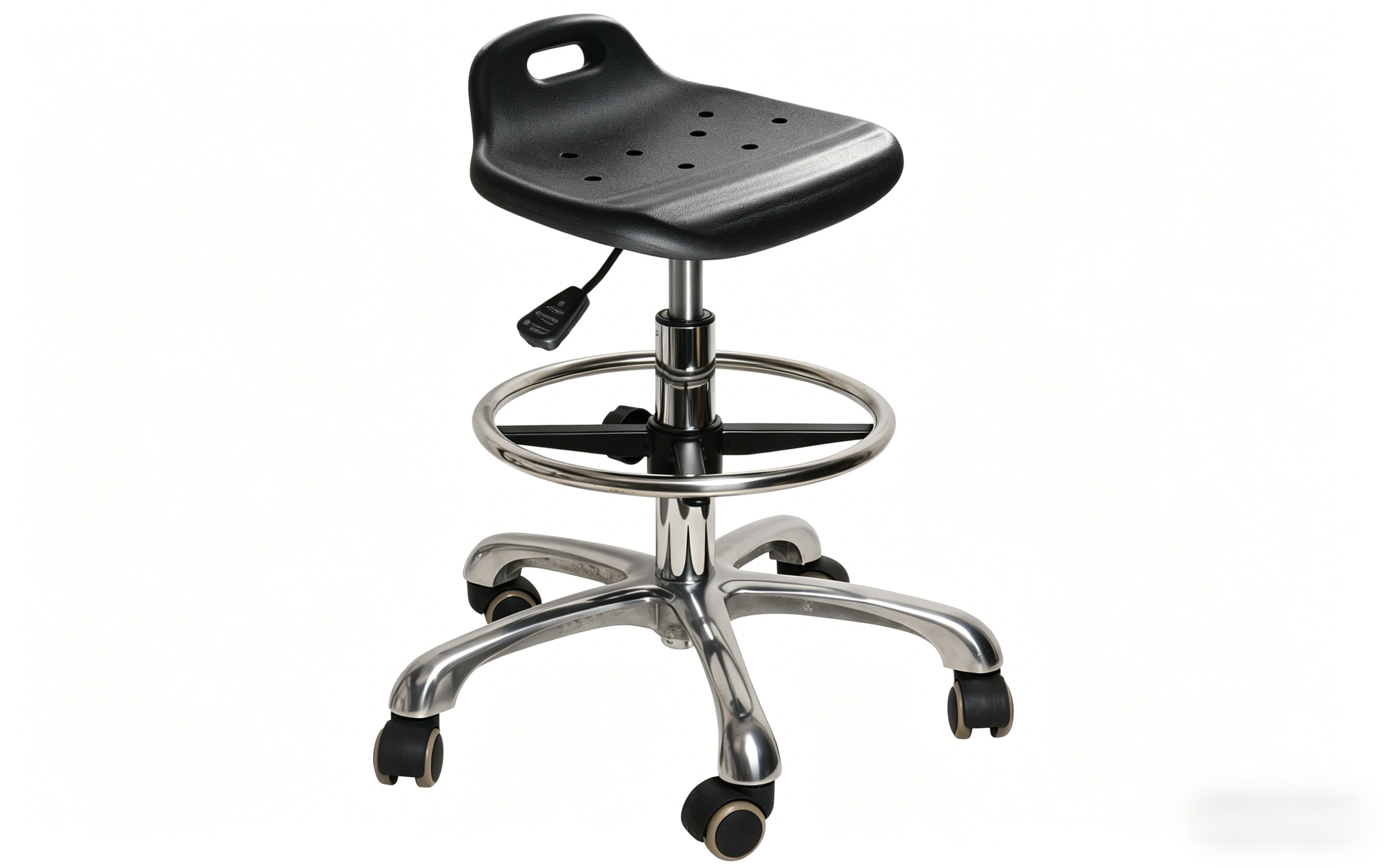
Choosing anti-static industrial chairs for German factories requires a detailed understanding of both electrostatic discharge protection and the strict standards that define Germany’s industrial environment. In sectors such as electronics manufacturing, semiconductor production, and precision assembly, even a small electrostatic discharge can damage sensitive components and lead to costly production losses. For B2B distributors and buyers, selecting the right ESD-safe seating is not just a technical decision but a strategic investment in quality control and operational reliability. German companies expect suppliers to provide solutions that combine compliance, durability, and ergonomic performance. Products like the industrial polyurethane with chrome foot ring and casters adjustable laboratory chair are increasingly relevant because they can be configured to meet ESD requirements while maintaining strong structural performance and user comfort.
The most important factor in selecting anti-static industrial chairs is ensuring compliance with ESD standards. In Germany, this typically involves adherence to IEC and DIN EN regulations that govern electrostatic control in industrial environments. Chairs must be designed with conductive or dissipative materials that safely channel static electricity away from the user. This includes specialized upholstery, conductive casters, and grounding mechanisms that prevent charge accumulation. The industrial polyurethane with chrome foot ring and casters adjustable laboratory chair can be adapted with ESD-safe components, making it a reliable option for factories that require strict electrostatic control without compromising durability.
Material selection plays a crucial role in both ESD performance and long-term usability. Polyurethane is widely preferred because it offers a non-porous, easy-to-clean surface that resists chemicals and wear, while also being compatible with ESD-safe designs. In German factories, where cleanliness and durability are essential, this combination is highly valued. The industrial polyurethane with chrome foot ring and casters adjustable laboratory chair provides a practical balance between material strength and functional adaptability, ensuring that it can withstand demanding industrial conditions while maintaining consistent performance.
Ergonomics is another key consideration when choosing anti-static chairs. Workers in German factories often perform precise tasks for extended periods, which means that seating must support proper posture and reduce fatigue. Adjustable features such as seat height, foot support, and stable mobility are essential for maintaining efficiency and comfort. German buyers place strong emphasis on these aspects, as they directly influence productivity and workplace safety. A well-designed ESD chair not only protects sensitive equipment but also enhances overall operational performance.
In conclusion, choosing anti-static industrial chairs for German factories requires a comprehensive approach that combines ESD compliance, durable materials, ergonomic design, and long-term reliability. For B2B distributors and suppliers, offering solutions that meet these criteria is essential for success in this highly specialized market. By providing adaptable and high-quality products such as the industrial polyurethane with chrome foot ring and casters adjustable laboratory chair, businesses can meet the expectations of German buyers, ensure operational safety, and build strong, long-term partnerships in a demanding industrial environment.
SEO Keywords: anti static industrial chairs Germany, ESD chairs Germany factories, B2B seating ESD Germany, industrial chair ESD compliance Germany, polyurethane ESD chair Germany, chrome foot ring chair Germany
READ MORE
How Climate Conditions in Germany Affect Industrial Chair Materials?
What Makes Industrial Chair Suppliers Competitive in Germany?
How to Provide Value-Added Services for German Industrial Buyers?
How to Position High-End Industrial Chairs in the German Market?
What Sales Strategies Work Best for Industrial Chairs in Germany?